

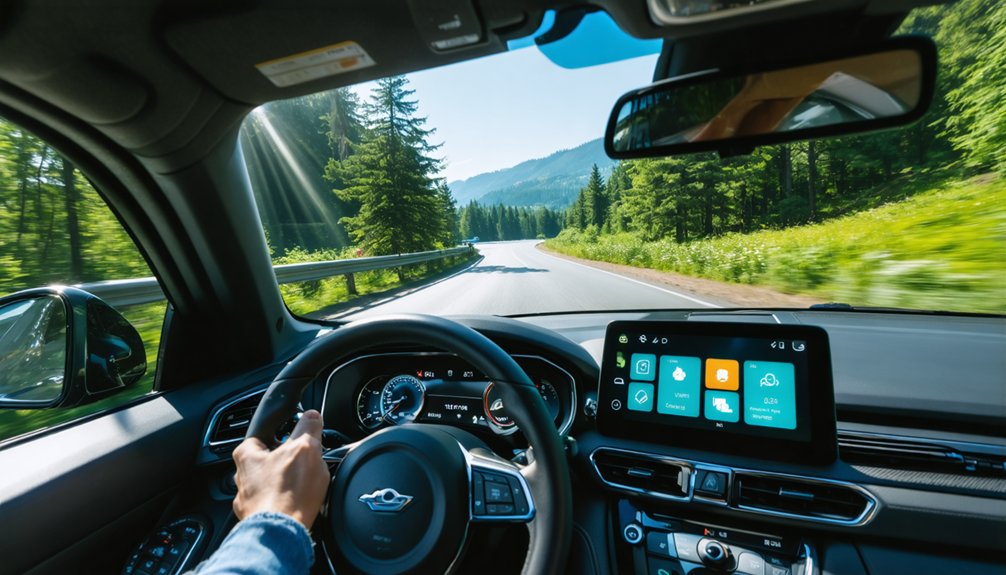

To optimize fuel usage with eco-driving modes, drivers should focus on smooth acceleration and deceleration. Maintaining steady speeds, particularly between 50-80 km/h, enhances fuel efficiency. Utilizing high gears at lower RPMs and reducing engine load—such as minimizing air conditioning use—can further improve fuel economy. Regular vehicle maintenance, including tire pressure checks and managing unnecessary cargo, is essential. Implementing these practices can lead to significant fuel savings and lower emissions. More effective strategies can be investigated further.
Highlights
- Activate eco-driving modes to refine throttle response and shift transmission behavior, prioritizing fuel savings during acceleration and deceleration.
- Maintain proper tire pressure and minimize vehicle load to ensure optimal fuel efficiency and performance.
- Regulate speed between 50-80 km/h and utilize cruise control on highways for steady speed maintenance, enhancing fuel usage.
- Adopt smoother driving techniques, such as gradual acceleration and engine braking, to cut fuel consumption significantly.
- Engage in regular vehicle maintenance and training programs to continually improve eco-driving skills and efficiency.
Understanding Eco-Driving Modes
Eco-driving modes represent an advanced feature in modern vehicles designed to enhance fuel efficiency and minimize emissions. These mode settings adjust vehicle performance parameters, focusing on eco benefits. Throttle response is refined for gradual acceleration, while transmission behavior shifts at lower RPMs prioritizing fuel savings over pure performance. Additionally, auxiliary systems, such as air conditioning, operate at reduced intensity, thereby lessening engine load. This results in improved fuel economy, with reported savings of up to 24% in some models. Eco mode’s improved fuel and energy efficiency can lead to significant cost savings over time. By emphasizing a balance between performance and environmental consciousness, drivers can contribute to a more sustainable driving culture. The implementation of eco modes encourages drivers to adopt smoother acceleration and deceleration techniques, further enhancing their fuel efficiency.
The shift towards conservative driving patterns not only helps protect the environment but also lowers long-term operating costs. Understanding eco-driving modes equips drivers to make informed choices, promoting a community invested in sustainability and efficient vehicle use.
The Impact of Driving Behavior on Fuel Economy
Driving behavior markedly influences fuel economy, as even minor adjustments can lead to substantial changes in consumption. Aggressive driving, characterized by rapid acceleration and frequent braking, can reduce fuel efficiency by 15%–30% on highways and up to 40% in stop-and-go traffic.
Conversely, smooth acceleration and anticipation of road conditions enhance fuel economy by minimizing engine strain and energy loss. Driver training programs can help fleets save fuel and money while reducing emissions. Adopting higher gears at lower RPMs further contributes to efficient fuel use. Additionally, as gasoline prices rise, drivers tend to reduce daily travel and improve fuel economy by adjusting their behaviors.
Emphasizing fuel-efficient driver behavior can lead to reduced costs and lower emissions, promoting a sustainable driving culture within communities.
Key Techniques for Effective Eco-Driving
Effective eco-driving encompasses a variety of techniques designed to enhance fuel efficiency while minimizing environmental impact. Key driver habits include managing vehicle load by removing unnecessary cargo and avoiding heavy roof racks, which can substantially reduce fuel efficiency. Maintaining tire pressure is crucial, as under-inflated tires lower fuel economy. Regulating speed between 50-80 km/h optimizes fuel usage, and using cruise control on highways aids in maintaining steady speeds. Engine braking and gradual acceleration further improve fuel efficiency, while judicious use of air conditioning minimizes extra load on the engine. Additionally, keeping your car as light as possible reduces fuel efficiency contributes significantly to overall performance. Furthermore, eco-driving can lead to savings of hundreds of pounds per vehicle each year on fuel. Finally, anticipating traffic flow through smooth driving minimizes wasted fuel, making a substantial difference in overall efficiency. These strategies are integral in developing responsible driving habits and effective vehicle maintenance, as maintaining optimal tire pressure is essential. Gentle acceleration saves fuel in the city, enhancing your eco-driving practices.
Evaluating Real-World Performance of Eco Modes
Although many drivers may be unaware, the real-world performance of eco modes substantially impacts fuel efficiency and emissions. The implementation of eco modes often results in reduced engine RPM during various driving phases, leading to notable fuel savings. Research reveals that adopting eco-driving techniques can cut fuel consumption by 15% to 25% for traditional vehicles and even more for hybrids. Increased penetration of eco-driven vehicles within traffic perfectly adjusts velocity trajectories, which reduces unnecessary braking and further enhances eco benefits. Real-time control algorithms can refine driving patterns, promoting smoother acceleration and deceleration, and consequently improving overall energy efficiency. Additionally, road transportation is a major source of energy consumption and carbon emissions worldwide, making eco-driving particularly significant. Significant contributions to solving energy issues can be achieved through the adoption of eco-driving practices, especially given the transportation industry’s role in energy consumption and emissions.
Advanced Vehicle Systems for Enhanced Efficiency
The integration of advanced vehicle systems has emerged as a vital factor in enhancing fuel efficiency beyond the capabilities of eco modes. Technologies such as cam phasing and variable valve timing optimize combustion, while direct fuel injection guarantees precision in fuel delivery. Advanced transmissions, including 6- to 8-speed automatics and continuously variable transmissions (CVTs), maximize gear ratios, maintaining engine performance in the most efficient range. Employing lightweight materials and aerodynamic designs further reduces energy consumption by minimizing vehicle mass and drag. These innovations collectively drive significant improvements in fuel efficiency, supporting drivers’ goals of responsible fuel usage. The continued evolution of vehicle systems promotes a community of environmentally conscious consumers, reinforcing a commitment to sustainable driving. Moreover, advancements in connected-vehicle technologies enable vehicles to optimize fuel usage by dynamically communicating with the environment and other vehicles.
Recommended Practices for Eco-Driving Mode Usage
To maximize fuel efficiency through eco-driving, drivers should adopt a variety of recommended practices that encourage sustainable habits behind the wheel.
First, maintaining smooth driving behavior is vital; avoiding sudden acceleration and harsh braking can reduce fuel consumption by up to 20%.
Additionally, optimizing speed and gear use, such as shifting early and avoiding high RPMs, acts as an eco-friendly fuel saver.
Regular vehicle maintenance, including tire pressure checks and minimizing unnecessary loads, further enhances efficiency.
Drivers must adapt strategies to traffic conditions, especially in congested areas, for effective fuel management.
Embracing these practices promotes a driving culture centered on safety and environmental awareness, creating a community committed to fuel efficiency and eco-friendly transportation methods.
Tools and Resources for Eco-Driving Training
Effective eco-driving practices can be substantially enhanced through various tools and resources designed for training drivers.
Programs like SmartDriver offer free online courses targeting professional drivers of medium and heavy-duty vehicles, focusing on route optimization and speed management to achieve significant fuel savings.
The International Road Transport Union provides certification programs that benchmark eco-driving skills and promote accountability in fuel efficiency.
Additionally, free toolkits from organizations like the Climate Action Accelerator include practical materials for broader adoption among both public and private sector drivers.
In-vehicle training and simulation-based methods offer real-time feedback, ensuring drivers can adapt their eco-driving techniques to different conditions.
Moreover, these resources cultivate a strong community dedicated to sustainable driving practices.
Conclusion
In conclusion, optimizing fuel usage through eco-driving modes significantly enhances vehicle efficiency and reduces environmental impact. Understanding eco-driving principles and employing effective techniques can lead to substantial fuel savings. Real-world evaluations highlight the effectiveness of these modes, while advancements in vehicle technology further support improved fuel economy. By adopting recommended practices and utilizing available training resources, drivers can contribute to a more sustainable future and lower their fuel expenses, fostering a conscientious approach to driving.
References
- https://www.consumerreports.org/cars/fuel-economy-efficiency/does-eco-mode-really-save-gas-a6653523930/
- https://pmc.ncbi.nlm.nih.gov/articles/PMC8512309/
- https://www.toyotanation.com/threads/eco-vs-normal-mode-test-results.530513/
- https://www.progressive.com/answers/what-is-eco-drive-mode/
- https://www.pilihcar.com/post/What-Is-ECO-Mode-In-Your-Car-And-When-You-Should-And-Shouldnt-Use-It
- https://www.jdpower.com/cars/shopping-guides/what-is-eco-mode
- https://www.motorama.com.au/blog/motoring-tips/different-driving-modes
- https://www.acg.aaa.com/connect/blogs/4c/auto/what-is-eco-driving
- https://ceepr.mit.edu/wp-content/uploads/2021/09/2019-019.pdf
- https://afdc.energy.gov/conserve/driving-behavior