

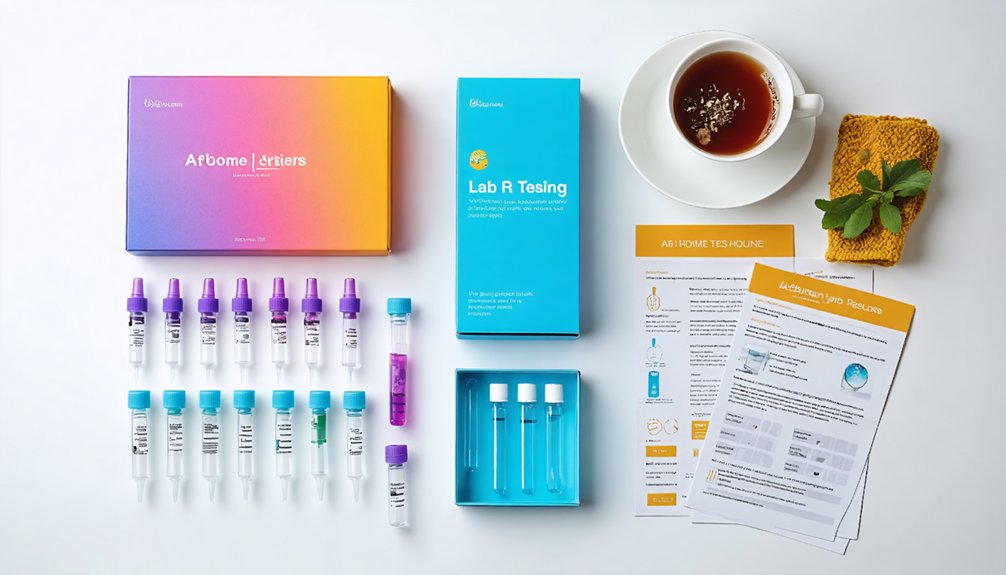

At-home lab testing kits offer a convenient, private way for individuals to manage their health from home. These kits cover a wide range of tests, including disease screenings and genetic assessments, all processed by accredited laboratories to guarantee accuracy. They enhance healthcare access, especially in underserved areas, and support proactive health management. As technology evolves, these kits become more sophisticated. Uncovering more about their benefits and future developments can provide further perspective into this revolutionary healthcare trend that will change healthcare.
Highlights
- At-home lab testing kits allow users to conduct tests privately and conveniently from home, enhancing healthcare accessibility.
- These kits cover a wide range of tests, including infectious diseases, chronic conditions, and reproductive health evaluations.
- Tests are processed by CLIA-certified laboratories, ensuring accuracy and trust in results comparable to traditional lab testing.
- Technological advancements like AI integration and liquid biopsies are improving the efficiency and capabilities of at-home testing.
- The market for at-home lab testing is projected to grow significantly, driven by increased demand for accessible healthcare solutions.
Overview of At-Home Lab Testing Kits
As individuals increasingly seek convenient healthcare solutions, at-home lab testing kits have emerged as a viable option for managing personal health. These kits allow users to conduct tests from the comfort of their home, substantially enhancing accessibility and guaranteeing that individuals, especially in rural or mobility-challenged areas, can monitor their health without the need for clinical visits. Each kit operates under strict test regulation to guarantee accuracy, and many include medical oversight through CLIA-certified labs that analyze samples. This combination of privacy and autonomy enables users to take charge of their health while maintaining confidentiality. With straightforward instructions and prepaid shipping, at-home lab testing supports proactive health management, promoting a sense of community among individuals prioritizing their well-being. Moreover, these tests can be a more affordable option compared to traditional lab tests, making them an attractive choice for many individuals. Additionally, at-home health tests can be used for pre-screening certain conditions, allowing for early detection and intervention when necessary. Notably, these tests are evaluated for accuracy, reliability, and validity by the FDA to ensure that users receive trustworthy results.
Types of Tests Available
At-home lab testing kits encompass a wide variety of tests designed to address diverse health needs, enabling individuals to monitor their well-being effectively. Test varieties range from infectious disease screenings, such as COVID-19 and STIs, to chronic disease assessments like blood glucose and kidney function tests. At-home tests help diagnose early and facilitate timely care. Reproductive health evaluations include fertility hormone and pregnancy tests, while genetic and ancestry kits provide perspectives into disease predispositions and heritage. Immunity and drug tests further enhance personal health management. The effectiveness of these kits often hinges on accurate sample collection and processing. With the right kit, individuals can gain useful information about their health, promoting a sense of belonging to a proactive community prioritizing well-being. It is important to ensure that at-home test companies provide clear instructions and support to help users achieve accurate results. Additionally, many COVID-19 tests detect an infection in as little as 48 hours, reinforcing the importance of timely testing for swift medical intervention.
Convenience and Accessibility Benefits
The convenience and accessibility of at-home lab testing kits have revolutionized how individuals manage their health. These kits allow users to collect samples from the comfort of their homes, eliminating the need for trips to healthcare facilities, which can be time-consuming and expose individuals to infectious agents. Telehealth services complement these kits by providing immediate consultations, making personalized medicine more achievable.
Particularly appealing to older adults, at-home tests facilitate continuous monitoring of chronic conditions and cancer screenings, enhancing both timely health checks and user enablement. Furthermore, they broaden access to testing in underserved regions, ensuring that everyone, regardless of location, can proactively manage their health with dignity and privacy. Additionally, the increasing availability of at-home testing ensures that individuals can easily access necessary health interventions without the traditional barriers presented by clinical settings. Importantly, the at-home testing market is projected to reach USD 11,877.8 million by 2035, reflecting the growing demand for self-diagnostic tools. North America dominates the market as it boasts advanced healthcare infrastructure.
Accuracy and Laboratory Standards
Accurate measurement and reliable results are fundamental components of effective health monitoring, especially when utilizing at-home lab testing kits. Most at-home tests are processed by government-approved, accredited laboratories that adhere to stringent lab standards and testing protocols designed to guarantee accuracy. These certified laboratories utilize advanced diagnostic technology comparable to traditional hospitals, reinforcing result quality and precision. However, accuracy can be affected by user error, sample handling, and variability in individual procedures. Clear instructions and at-home collection by trained professionals can mitigate common mistakes. Additionally, while regulations continue to strengthen quality control measures, it is essential for consumers to remain aware of the limitations of at-home kits, which are often designed primarily for screening rather than exhaustive diagnostics.
Result Delivery and Follow-Up
When utilizing lab testing kits, timely result delivery is crucial for effective health management. Most results become available within 5 to 7 business days, with users able to engage in result tracking through dedicated dashboards or member accounts.
Notifications via email or app alerts keep users updated on any issues or when results are ready. Results are typically delivered electronically, ensuring confidentiality and easy access, with some services allowing integration with electronic medical records.
Follow up support is often available, including consultations with healthcare professionals to discuss findings and next steps. Additionally, educational resources help users interpret results, promoting a sense of community and connection as they traverse their health path.
Crucial for effective health management, these resources are essential.
Impact on Healthcare and Preventive Care
At-home lab testing kits have substantially influenced the terrain of healthcare and preventive care by enhancing accessibility and promoting proactive health management. These kits contribute to health economics by reducing overall healthcare costs; studies show they can lower expenses by approximately 7% when paired with telehealth services.
The convenience of at-home testing facilitates early detection of various diseases, enabling timely interventions that can prevent the progression to more severe health issues. Furthermore, they empower consumers by allowing them to monitor their health continuously, catering to diverse populations, particularly those with mobility or geographic barriers to traditional healthcare.
This integration of medical innovations signifies a transformative shift in how individuals engage with their health, fostering a community of informed and proactive patients.
Future of At-Home Testing Technologies
The future of at-home testing technologies holds significant promise for revolutionizing healthcare access and efficiency. Driven by technological advancements and resilient diagnostic innovations, the market is expected to grow from USD 7.79 billion in 2025 to USD 11.88 billion by 2035.
Key trends include increased automation and AI integration, enhancing sample processing and accuracy in results. Emerging methods such as liquid biopsies facilitate minimally invasive testing, while the Internet of Medical Things (IoMT) allows real-time monitoring and data sharing with healthcare providers.
Regulatory standards are tightening, ensuring consumers can trust at-home kits to match laboratory results. This evolution seeks to connect healthcare gaps, especially in underserved regions, nurturing greater accessibility and enabling individuals to take charge of their health.
Conclusion
To recap, at-home lab testing kits represent a significant advancement in personal healthcare, offering convenience and accessible options for a variety of tests. While concerns regarding accuracy and laboratory standards remain, ongoing improvements and innovations promise to enhance reliability. As these technologies continue to evolve, they stand to impact healthcare practices and preventive care, enabling individuals to take proactive steps in managing their health. The future of at-home testing holds great potential for more personalized healthcare solutions.
References
- https://www.mylabbox.com
- https://www.ambetterhealth.com/en/ar/provider-resources/provider-news/in-home-lab-test-kits/
- https://labxdiagnostics.com/how-at-home-lab-testing-is-revolutionizing-healthcare-in-2025/
- https://www.testing.com/tests/at-home-blood-test/
- https://www.retina-labs.com/at-home-lab-testing
- https://www.gethealthie.com/blog/at-home-lab-testing-advantages
- https://rxhometest.com/blog/benefits-home-health-test-kits
- https://www.bannerhealth.com/healthcareblog/advise-me/what-an-expert-wants-you-to-know-about-at-home-health-tests
- https://www.rschealth.com/blogs/news/home-vs-clinic-lab-testing
- https://medlineplus.gov/lab-tests/at-home-medical-tests/